The Role of Fiber in Canine Nutrition – The Scientific State of 2026
For a long time, we believed that good dog food = high meat content.
Fiber? At best, a “filler.”
By 2026, science sees this very differently.
Over the past years, gut microbiome research has fundamentally reshaped how we think about feeding dogs. Today, the question is no longer whether there is fiber in the food — but what type, what quality, and what it actually does inside the gut.
And this is where things become interesting.
The gut is not just an organ. It’s an ecosystem.
Your dog’s gut is home to billions of bacteria.
This microbiome:
- influences the immune system
- affects weight regulation
- plays a role in inflammatory processes
- communicates with the nervous system (yes — including behavior)
According to veterinary nutrition research published between 2019 and 2026, fermentable fibers play a central role in this system.
What actually happens?
Soluble fibers (e.g., pectin from apple or beet pulp) are fermented in the large intestine.
During this process, short-chain fatty acids (SCFAs) are produced — including butyrate.
Butyrate:
- nourishes intestinal epithelial cells
- strengthens the gut barrier
- has anti-inflammatory effects
- supports immune function
This is no longer about “improving stool quality.”
This is metabolic and immunological regulation.
Fiber is not one single thing
Modern veterinary nutrition distinguishes three key categories:
1. Soluble, fermentable fiber
→ feeds the microbiome
2. Insoluble fiber
→ increases stool bulk, regulates transit time
3. Prebiotic fiber
→ selectively supports beneficial bacterial strains
The 2026 professional consensus is clear:
The key is a balanced fiber profile — not a high crude fiber percentage.
Weight, satiety, blood sugar
Fiber:
- increases satiety
- reduces energy density
- supports a more stable glycemic response
It’s no coincidence that modern “weight management” formulas rely on complex fiber blends rather than simply reducing calories.
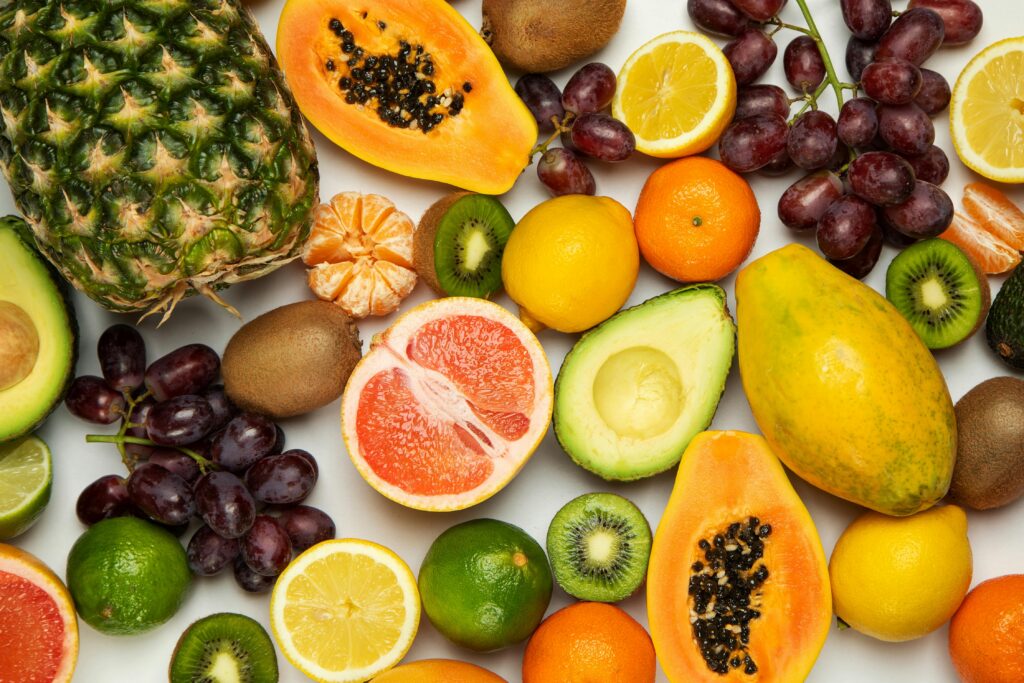
And what about fruit fiber?
Pectin-rich apple or beet pulp:
- is moderately fermentable
- has natural prebiotic effects
- may contain antioxidant compounds
What used to be called a “by-product” is now recognized as a functional ingredient.
Our story begins where the bin used to be the end.
But science now suggests:
that might also be where microbiome health begins.
What should you look for as a dog owner?
Don’t just check the crude fiber percentage.
Ask instead:
- What is the fiber source?
- Does it contain fermentable components?
- Does it come from multiple sources?
- Is it included for a functional reason — or just to “fill”?
Your dog doesn’t live on protein alone.
And not on calories alone either.
The gut microbiome is the new frontier.
Selected Scientific Sources
- NRC (National Research Council): Nutrient Requirements of Dogs and Cats
- AAFCO Official Publication (2024–2026 guidelines)
- Pilla & Suchodolski (2020): The role of the canine gut microbiome in health and disease. Veterinary Clinics of North America: Small Animal Practice
- Sandri et al. (2017–2022 updates): Dietary fiber and fecal microbiota modulation in dogs. Journal of Animal Science
- Middelbos et al. (2019): Fermentability of fiber sources in canine nutrition. Journal of Animal Science
- Schmitz & Suchodolski (2016–2023 reviews): Dysbiosis and SCFA production in dogs. Animal Microbiome